A mosaic made of spins
The team propose a first step towards a technology that allows a fast calculation of the Ising problem thanks to an experimental setup based on light.
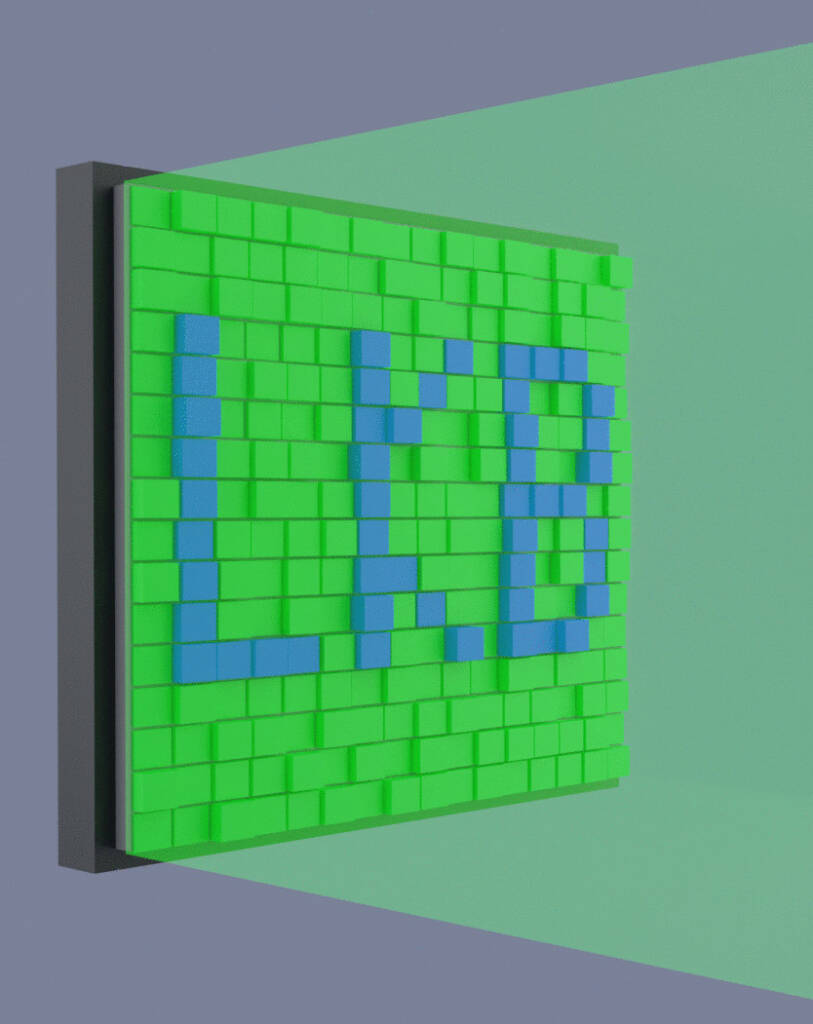
During the past decades, scientists have tried solving problems that take a long time with conventional computers. Recently, it has been demonstrated that quite a few of these problems can be written as a variation of what is called an Ising spin system. This system can be represented as a mosaic where each tile can be light or dark.
This mosaic is dynamic, and each tile influences the state (colour) of the others. In this context, it is desired to control the interaction between tiles to map any computational problem onto a mosaic.
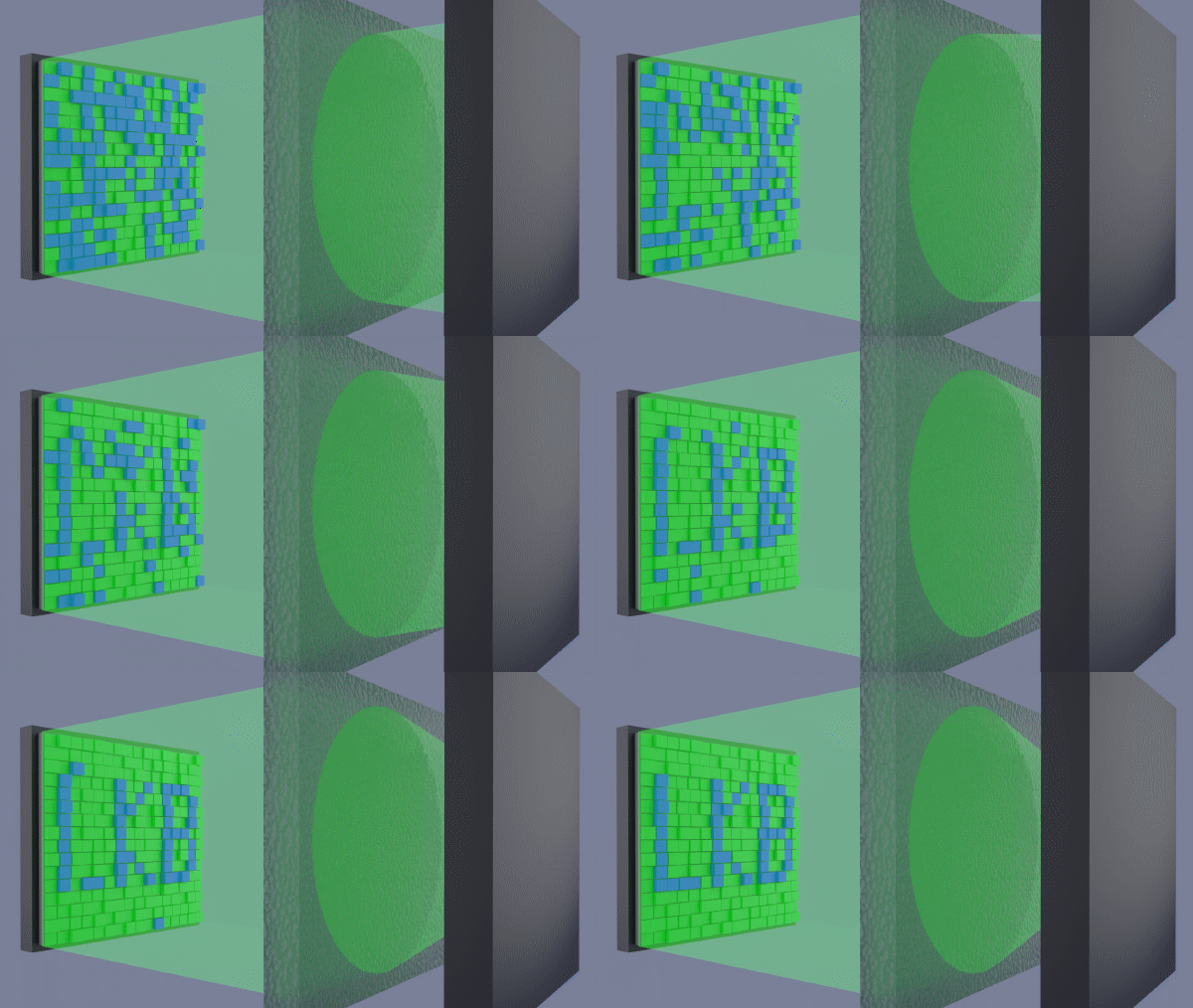
In this article, we propose a first step towards a technology that allows a fast calculation of the Ising problem thanks to an experimental setup based on light. We achieve said acceleration by artificially imprinting the mosaic on a light beam that propagates through a random medium, i.e. anything that looks opaque, even a glass of milk. This medium can be described by a big object called the Transmission Matrix. By leveraging this matrix, we modify the environment in which the mosaic evolves to influence its final state—as demonstrated in the gif, where the tiles organise to show the LKB initials. Our results demonstrate an important step towards rapidly solving customisable computational problems on simple optical systems.
Read also
Antimatter: coming soon to a lab near you?
News by Nancy Paul (co-author)
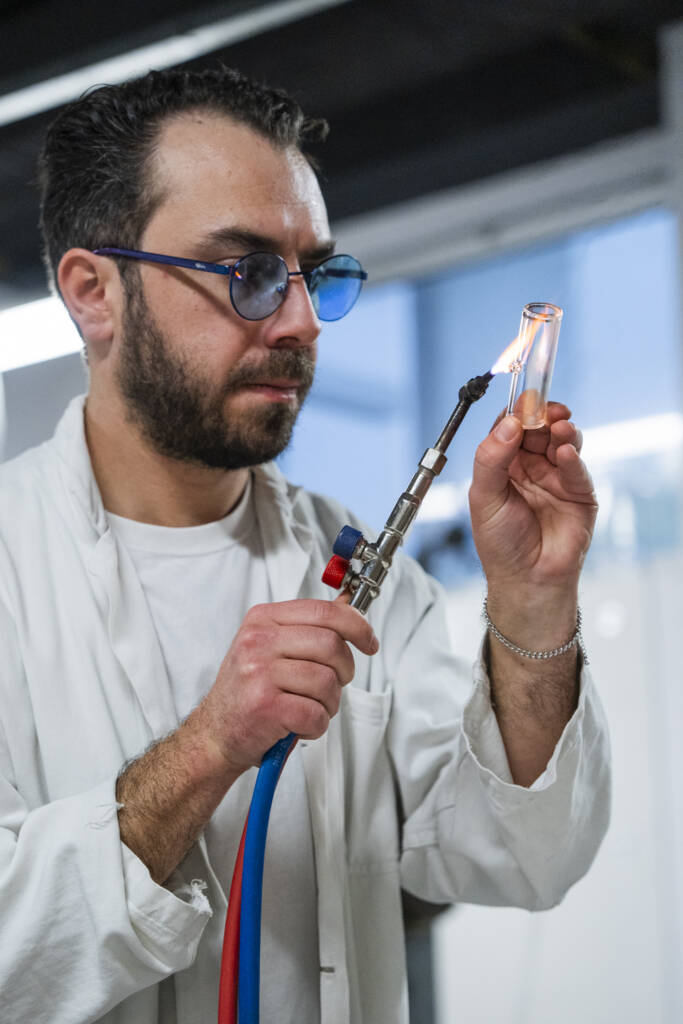
Glassblower at LKB – Tom Chevry
Interview published by Sciences Sorbonne Université
Shaking Atoms to Bring Black-Hole Quantum Chaos into the Lab
New publication led by Nathan GoldmanThis paper was selected as an Editors’ Suggestion in Physical Review Letters (PRL).