
Jan Joachim Arlt
Deeply bound polaronic states

Date & heure
22/04/26 – 11h
Lieu
Conf. IV, École Normal Supérieure (site Ulm/Lhomond)
Accueil
Un café sera offert à partir de 10h45, le séminaire commencera à 11h.
The physics of strongly interacting quantum systems remains a central challenge in many-body physics. We explore this regime by creating impurities with strong attractive or repulsive interactions in a quantum-degenerate gas of 39K atoms. This system supports two well-known quasiparticles: attractive and repulsive polarons. I first review previous spectroscopic and interferometric measurements of these states. Ramsey interferometry reveals distinct dynamical regimes associated with polaron formation and demonstrates how many-body states can be probed in the time domain.
More recently, we employed an ejection spectroscopy sequence that reveals a pronounced spectral feature at energies well below the polaron energy. We measure both the energy and spectral weight of this signal and compare our results to two theoretical scenarios: a low-energy polaron dressed by many bosons, and a bipolaron formed by two polarons bound via BEC-mediated interactions. Our observations provide evidence for deeply bound states below the conventional polaron branch, opening new perspectives on strong coupling physics in Bose gases.

Daniele Sanvitto
Istituto di Nanotecnologia –CNR Nanotec, Lecce & Roma, Italy
Collective phenomena in non-equilibirum quantum fluids

DigiQ Paris Summer School 2026
29 juin – 2 juillet

Giovanna Morigi
Theoretical Physics, Saarland University, 66123 Saarbruecken, Germany
Searching a quantum database with noise
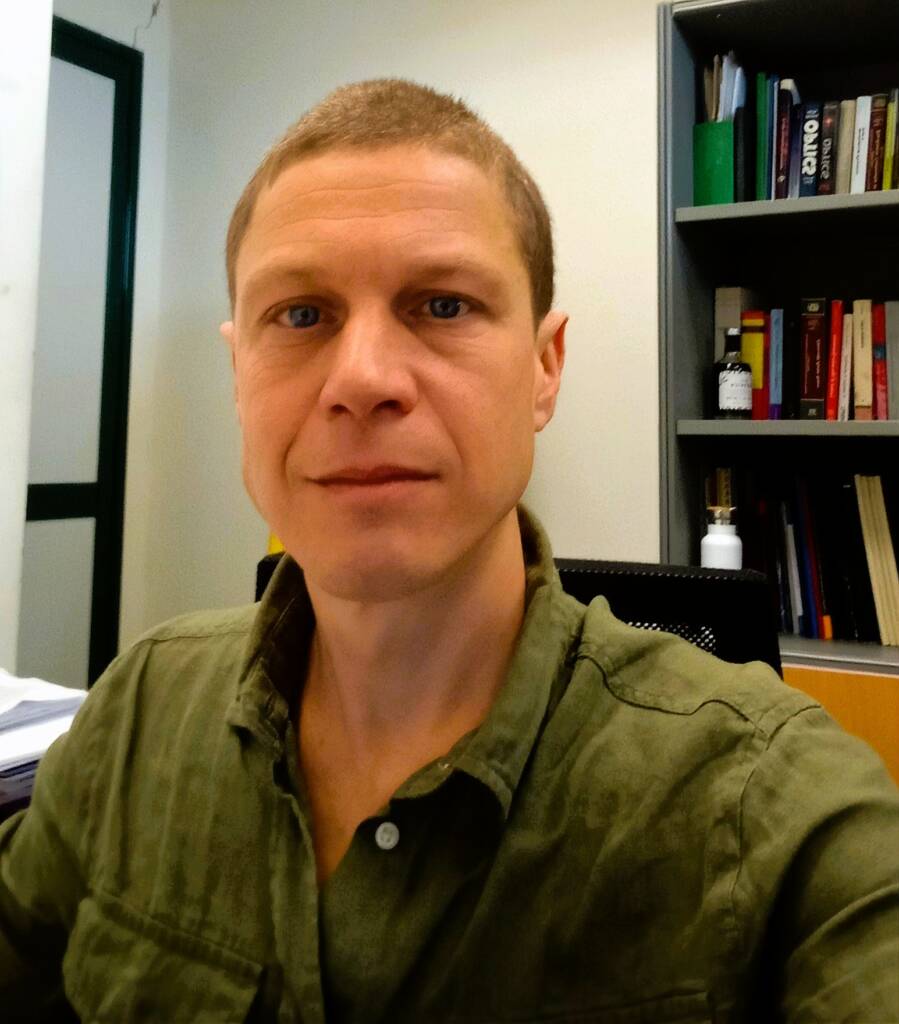
Matteo Zaccanti
Istituto Nazionale di Ottica (INO-CNR) & LENS
Ultracold lithium-chromium mixtures: From mass-asymmetric fermionic matter to paramagnetic molecules