
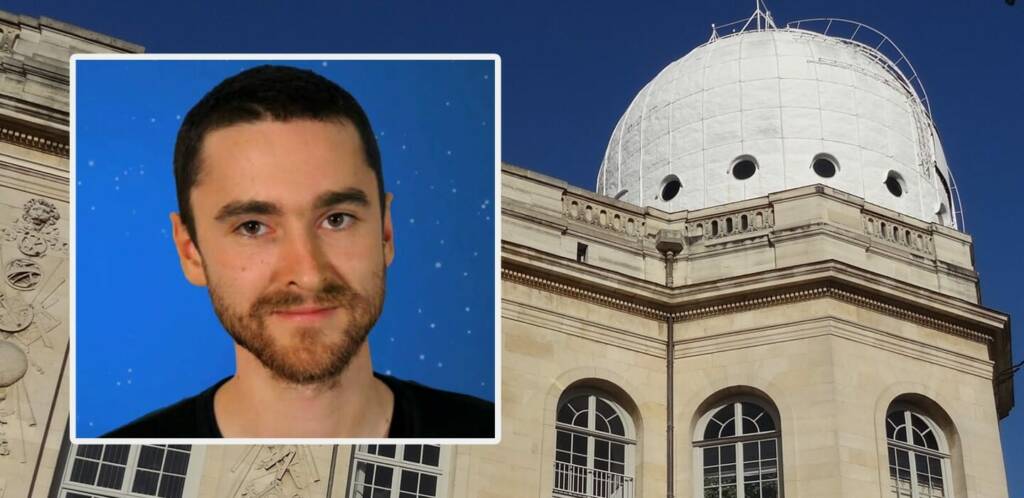
Pacôme Delva
Fundamental physics and geodesy with atomic clocks
Date & heure
24/06/2019
Lieu
Collège de France – 11, place Marcelin Berthelot – 75005 Paris, Room 2 : June 24, at 13:45
Accueil
At the beginning of the 20th century the theories of special and general relativity were developed by Einstein and his contemporaries. These physical theories revolutionize our conceptions of time and of the measurement of time. The atomic clocks, which appeared in the 1950s, are so accurate and stable that it is now essential to take into account many relativistic effects. The development and worldwide comparisons of such atomic clocks allowed for some of the most stringent of fundamental physics, as well as new ideas for the search of dark matter, which I will present in this talk. On a more applied level, when taking general relativity for granted, distant comparisons of atomic clocks can be used for navigation and positioning, as well as the determination of the geopotential. I will show how the chronometric observables can fit and be used within the context of classical geodesy.

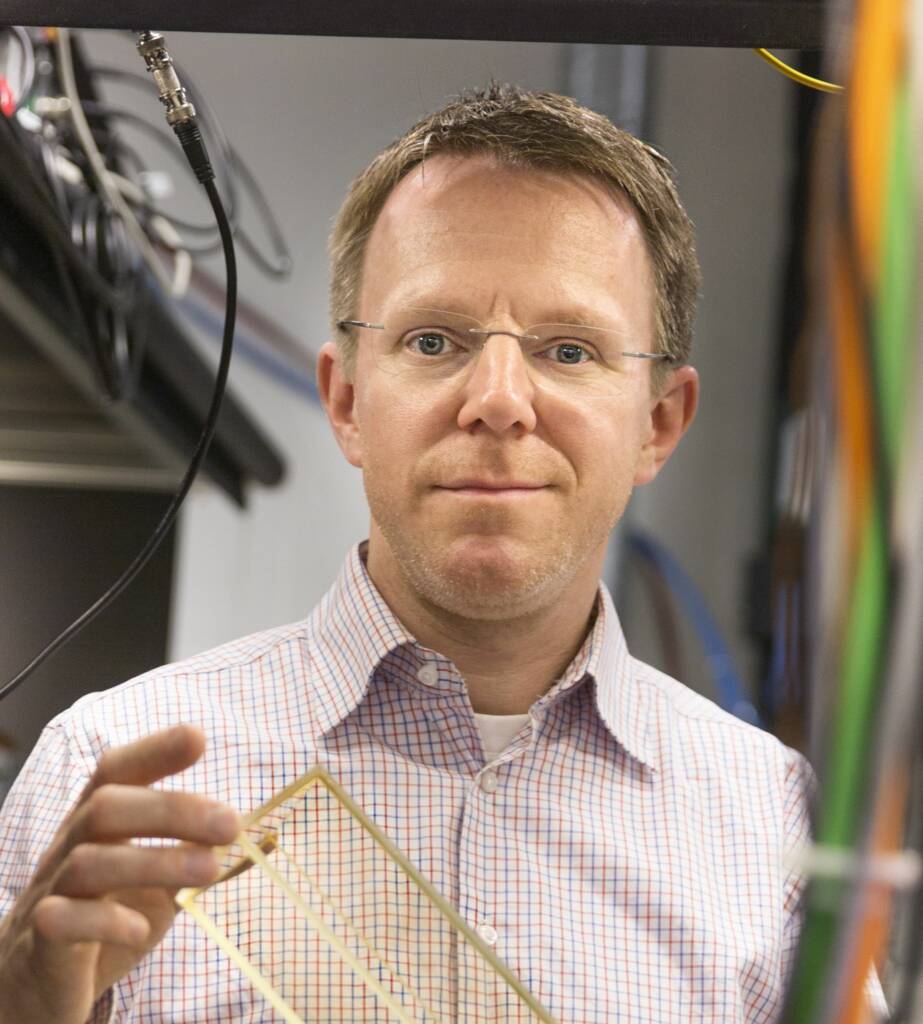
Daniele Sanvitto
Istituto di Nanotecnologia –CNR Nanotec, Lecce & Roma, Italy
Collective phenomena in non-equilibirum quantum fluids

DigiQ Paris Summer School 2026
29 juin – 2 juillet

Giovanna Morigi
Theoretical Physics, Saarland University, 66123 Saarbruecken, Germany
Searching a quantum database with noise