
Daniele Sanvitto
Collective phenomena in non-equilibirum quantum fluids

Date & heure
15/04/2026
Lieu
Salle 2 – Collège de France
11 Place Marcelin Berthelot, 75005
Accueil
Un café sera offert à partir de 10h45 en salle 1, le séminaire commencera à 11h.
Exciton–polaritons provide a unique laboratory to explore collective quantum phenomena in intrinsically driven–dissipative systems. Differently from equilibrium atomic Bose gases, polariton condensates combine strong interactions, optical accessibility and continuous pumping, allowing a direct experimental access to both steady states and dynamical critical behaviour [1].
In this seminar, I will first discuss condensation in two-dimensional semiconductor microcavities and the emergence of quasi-long-range order consistent with the Berezinskii–Kosterlitz–Thouless scenario [2]. I will then present experimental evidences of superfluid response in non-equilibrium polariton condensates, including suppressed scattering, phase rigidity and quantized vortex dynamics [3,4], as well as the onset of quantum turbulence in driven 2D systems [5].
Starting from this hydrodynamic picture, I will show recent measurements of spatial coherence and relaxation dynamics revealing universal critical scaling and critical slowing down in a non-equilibrium Bose system, in agreement with a diffusive critical dynamics beyond equilibrium universality classes [6].
In the second part, I will discuss how the engineering of polariton dispersion in patterned planar waveguides enables the stabilization of new collective phases. In particular, I will present the observation of polariton supersolidity, where crystalline density modulation coexists with phase coherence in a driven multimode condensate [7].
If time permits, I will briefly discuss ongoing efforts toward accessing the quantum regime in polariton platforms. In particular, I will outline how planar waveguide geometries and electrically controlled dipolar interactions may enable enhanced nonlinearities and scalable interferometric architectures [8,9], opening perspectives toward few-particle physics and cavity-enhanced quantum effects in solid-state systems.
References
[1] D. Sanvitto & S. Kena-Cohen, Nature Materials 15, 1061 (2016).
[2] D. Caputo et al., Nature Materials 17, 145 (2018).
[3] G. Lerario et al., Nature Physics 13, 837 (2017).
[4] D. Caputo et al., Nature Photonics 13, 488 (2019).
[5] R. Panico et al., Nature Photonics 17, 451 (2023).
[6] U. C. Täuber & S. Diehl, Phys. Rev. X 4, 021010 (2014).
[7] D. Trypogeorgos et al., Nature 639, 337 (2025).
[8] D. G. Suárez-Forero et al., Phys. Rev. Lett. 126, 137401 (2021).
[9] A. Fieramosca et al., arXiv:2512.02659 (2025).

DigiQ Paris Summer School 2026
29 juin – 2 juillet
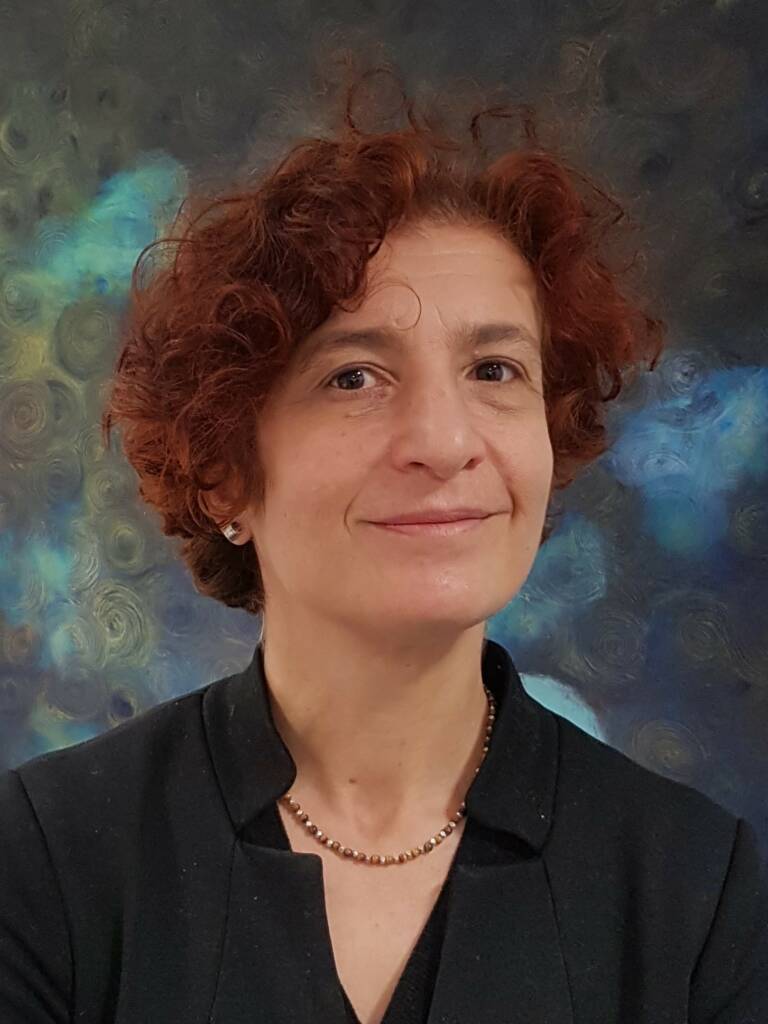
Giovanna Morigi
Theoretical Physics, Saarland University, 66123 Saarbruecken, Germany
Searching a quantum database with noise
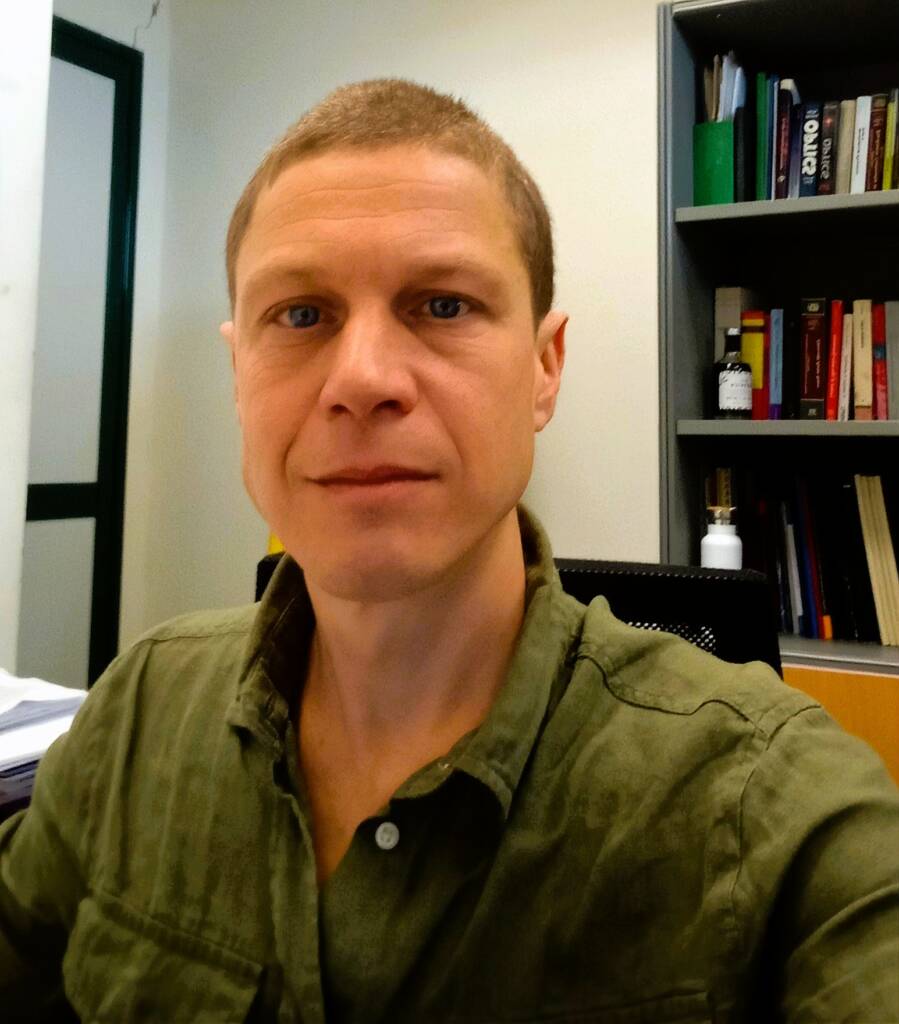
Matteo Zaccanti
Istituto Nazionale di Ottica (INO-CNR) & LENS
Ultracold lithium-chromium mixtures: From mass-asymmetric fermionic matter to paramagnetic molecules