
Antiprotonic Atoms
In an antiprotonic atom, an antiproton replaces an electron around the nucleus. Its bound states sit in the strongest Coulomb fields that can be studied in the laboratory. The LKB team leads PAX, an ERC-funded project doing precision x-ray spectroscopy of antiprotonic atoms to test strong-field QED.
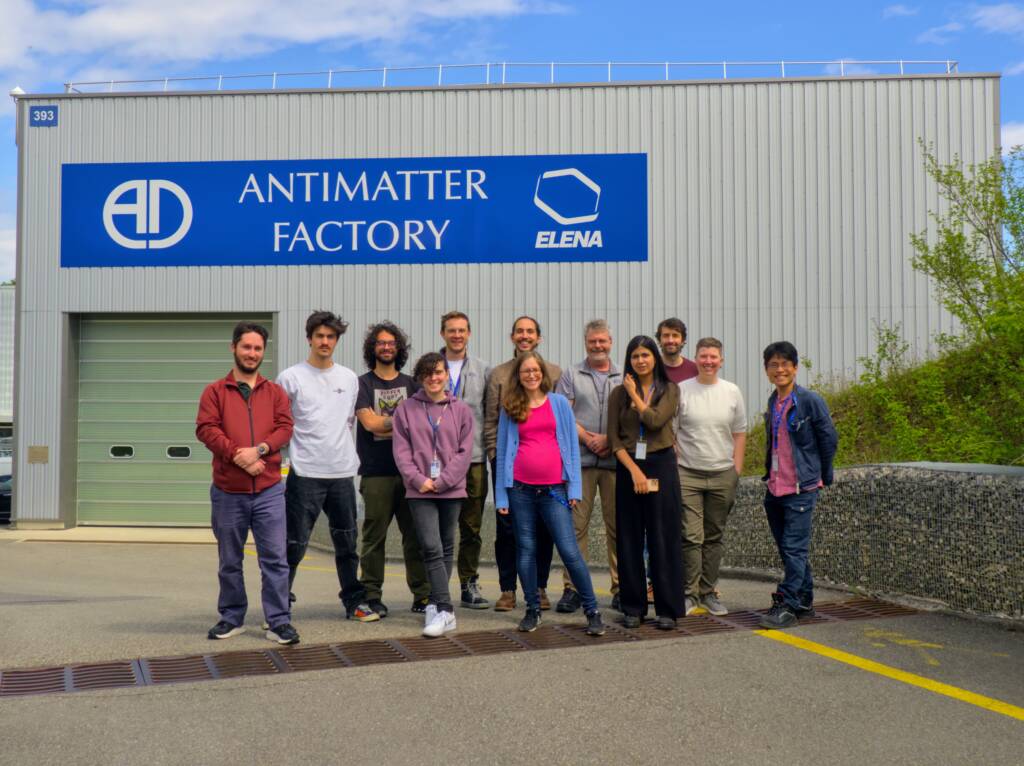
This work relies on ELENA (Extra Low ENergy Antiprotons) at CERN, operating since 2021. It delivers slow, bunched antiprotons that can be captured and used to form exotic atoms.
At ELENA, the team is also part of the ASACUSA, PUMA and GBAR collaborations.
PAX
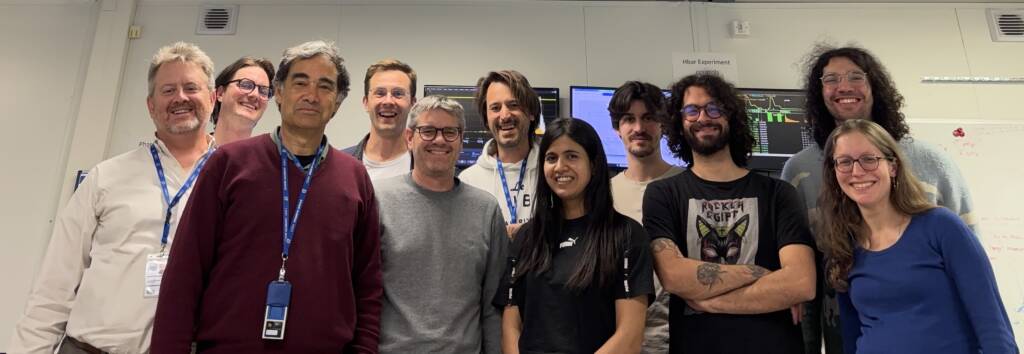
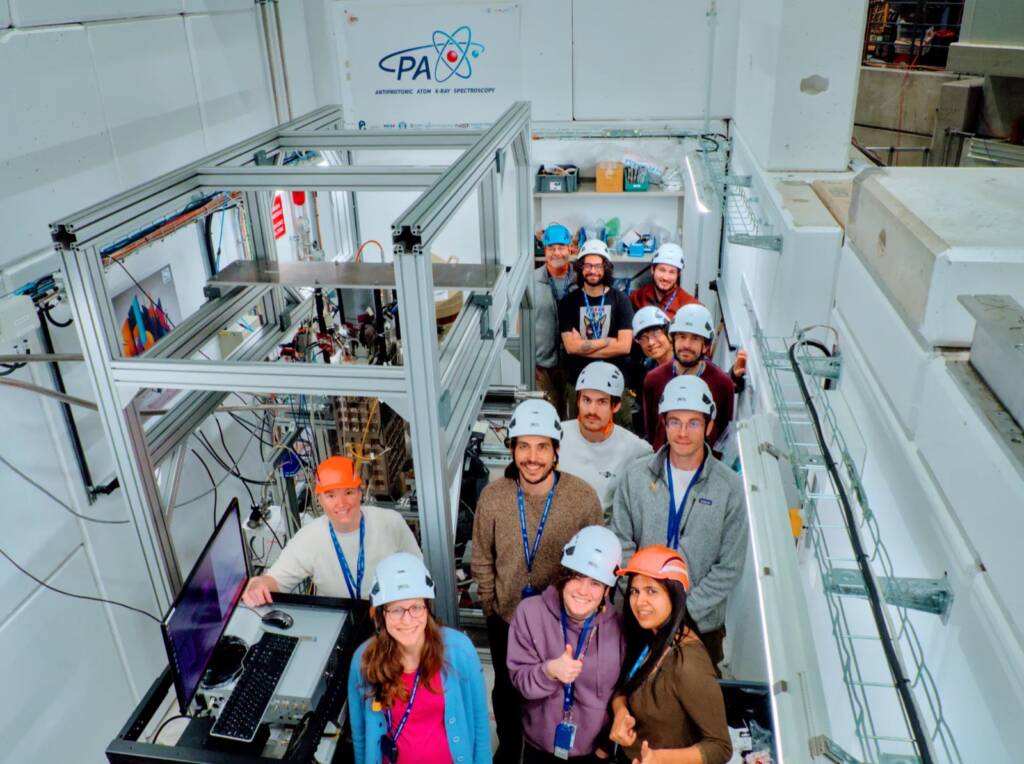
Partners
LKB and LPNHE (France), NIST (USA), Technion (Israel), University of Lisbon (Portugal), Kyoto University, RIKEN, Chubu University, Rikkyo University and Institute of Science Tokyo (Japan), Imperial College London (UK), and the ASACUSA collaboration at CERN.
Funding
ERC Starting Grant PAX (2024–2029, grant no. 101115849), preceded by an ANR JCJC grant (2023–2024). PAX has also been supported by EURO-LABS.

Antiprotonic x rays for strong-field QED
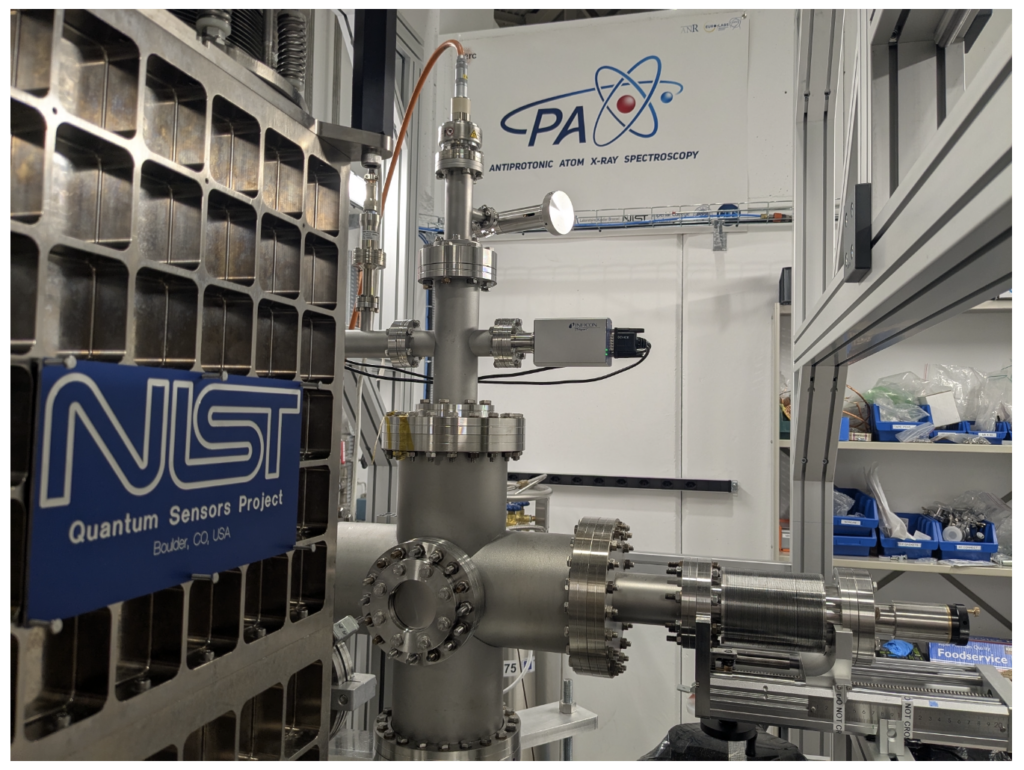
PAX tests strong-field QED through x-ray spectroscopy of antiprotonic atoms. Transitions between circular Rydberg states are highly sensitive to QED and almost insensitive to nuclear structure. Measured with quantum-sensing detectors, they can test QED with about two orders of magnitude more sensitivity than current experiments, across a broad range of elements.
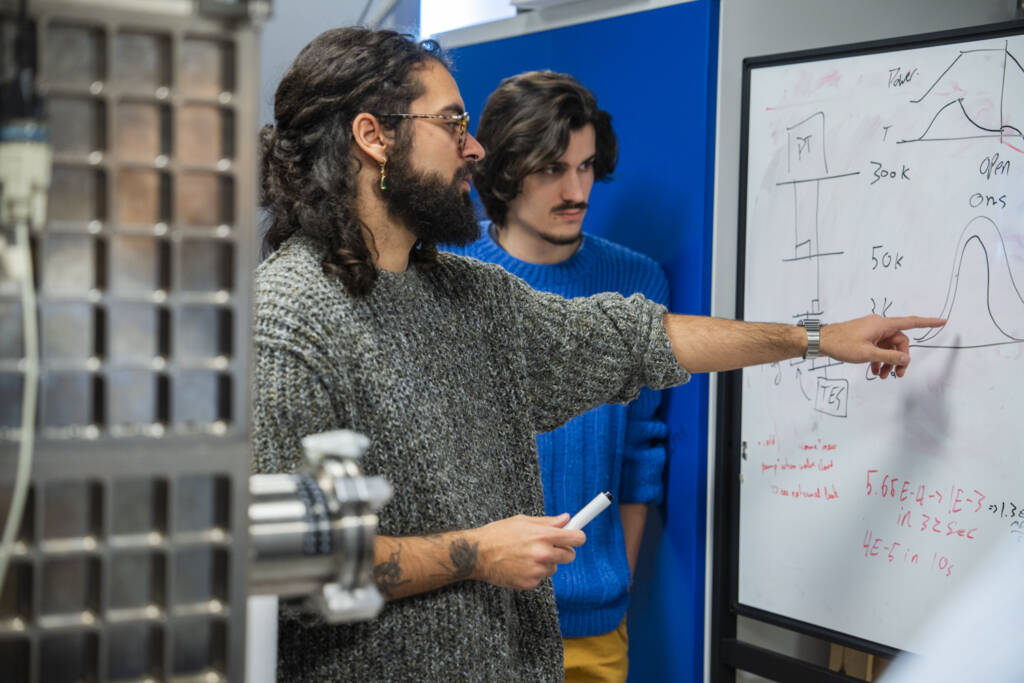
PAX combines two new technologies: slow antiproton beams from ELENA, and transition-edge sensor (TES) microcalorimeters developed with NIST, which offer high resolution over a broad energy band. The measurements also provide precise antiprotonic silicon x rays, useful as references for the GAPS balloon experiment searching for cosmic antinuclei.
Milestones
- 2024 · PAX becomes the first user of CERN’s new TELMAX test zone.
- 2025 · First test beams with a prototype TES array (CERN news).
- 2026 · High-statistics runs with an improved setup, using a new extraction mode developed with the ELENA team that delivers antiprotons in many small bunches.
- Next · PAX has joined ASACUSA. A dedicated beamline is under construction for the physics campaigns after CERN’s Long Shutdown 3 (2028–2029).
Read more
- N. Paul et al., Testing Quantum Electrodynamics with Exotic Atoms, Phys. Rev. Lett. 126, 173001 (2021). The physics case.
- G. Baptista et al., PoS(EXA-LEAP2024) 085 (2025), arXiv:2501.08893. Methods and prospects.
- K. Morgan et al., Transition-Edge Sensor Spectrometer for Precision Spectroscopy of Antiprotonic Atoms, IEEE Trans. Appl. Supercond. 36(6) (2026). The PAX spectrometer and its prototype at TELMAX.
ASACUSA
Atomic Spectroscopy And Collisions Using Slow Antiprotons
ASACUSA is a long-running CERN collaboration at the Antiproton Decelerator. It compares matter and antimatter through precision spectroscopy of antiprotonic helium and antihydrogen, and studies collisions between antiprotons and ordinary atoms. Antiprotonic helium is made by stopping antiprotons in a helium gas cell, the same kind of target PAX needs for its noble-gas measurements. Joining ASACUSA gives PAX a permanent home at ELENA.
What we are building
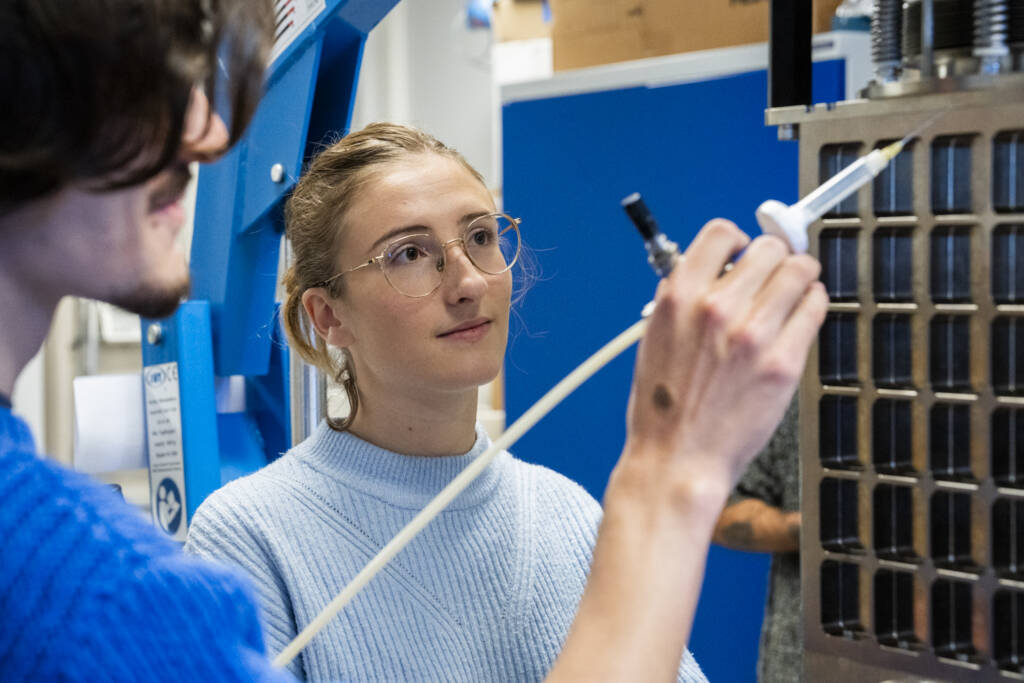
A new beamline branches off the ASACUSA antiprotonic-helium line and sends antiprotons into a dedicated PAX gas cell, viewed by a large-area TES array. Beamtime on this line will be shared with ASACUSA’s antiproton annihilation cross-section measurements. Michael Roosa’s Marie Skłodowska-Curie project, TESAAS, develops this setup.
Our role
Nancy Paul is the LKB team leader in ASACUSA and a member of its collaboration board, responsible for the PAX program within the collaboration.
Read more: ASACUSA at CERN · ASACUSA status report 2026, M. Hori, E. Widmann et al., CERN-SPSC-2026-008.
PUMA


antiProton Unstable Matter Annihilation
PUMA, antiProton Unstable Matter Annihilation, is a nuclear-physics experiment at CERN aiming at probing the surface properties of stable and rare isotopes by use of low-energy antiprotons. Low-energy antiprotons offer a very unique sensitivity to the neutron and proton densities at the annihilation site, i.e. in the tail of the nuclear density. Today, no facility provides a collider of low-energy radioactive ions and low-energy antiprotons: while not being a collider experiment, PUMA aims at transporting one billion antiprotons from ELENA, the Extra-Low-ENergy Antiproton ring, to ISOLDE, the rare-isotope beam facility of CERN. PUMA will enable the capture of low-energy antiprotons by short-lived nuclei and the measurement of the emitted radiations. In this way, PUMA will give access to the so-far largely unexplored isospin composition of the nuclear-radial-density tail of radioactive nuclei.
The LKB team contributes atomic theory to PUMA and is studying how antiprotonic-atom x-ray spectroscopy could be added to its nuclear-physics program.
Learn more about PUMA:
- PUMA: antiprotons to probe the surface of radioactive nuclei, CERN EP Newsletter (2020).
- PUMA, antiProton unstable matter annihilation, Eur. Phys. J. A 58, 88 (2022).
GBAR
The team is a member of the GBAR collaboration, which studies the effect of gravity on antimatter at CERN’s AD/ELENA facility.