Muonic atoms
Muonic atoms are exotic systems in which one electron is replaced by a muon, its heavier cousin: a short-lived elementary particle about 200 times heavier than the electron. This substitution drastically alters the atom’s properties, providing researchers with a powerful tool to probe the fundamental forces of nature and the structure of atomic nuclei with unprecedented precision. Through the study of muonic atoms, we gain valuable insights into quantum electrodynamics, nuclear physics, and the underlying principles governing the universe.
The LKB team works on two projects with muonic atoms:
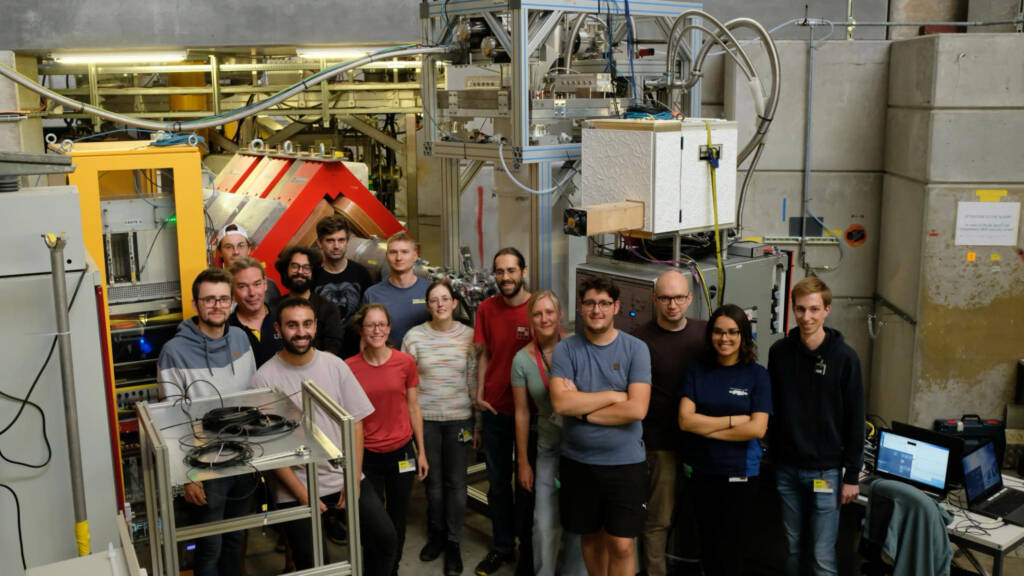
- QUARTET measures the charge radii of light nuclei with muonic x-ray spectroscopy at the Paul Scherrer Institute (PSI), using metallic magnetic calorimeters (MMCs) from KIP Heidelberg. Nancy Paul is co-spokesperson.
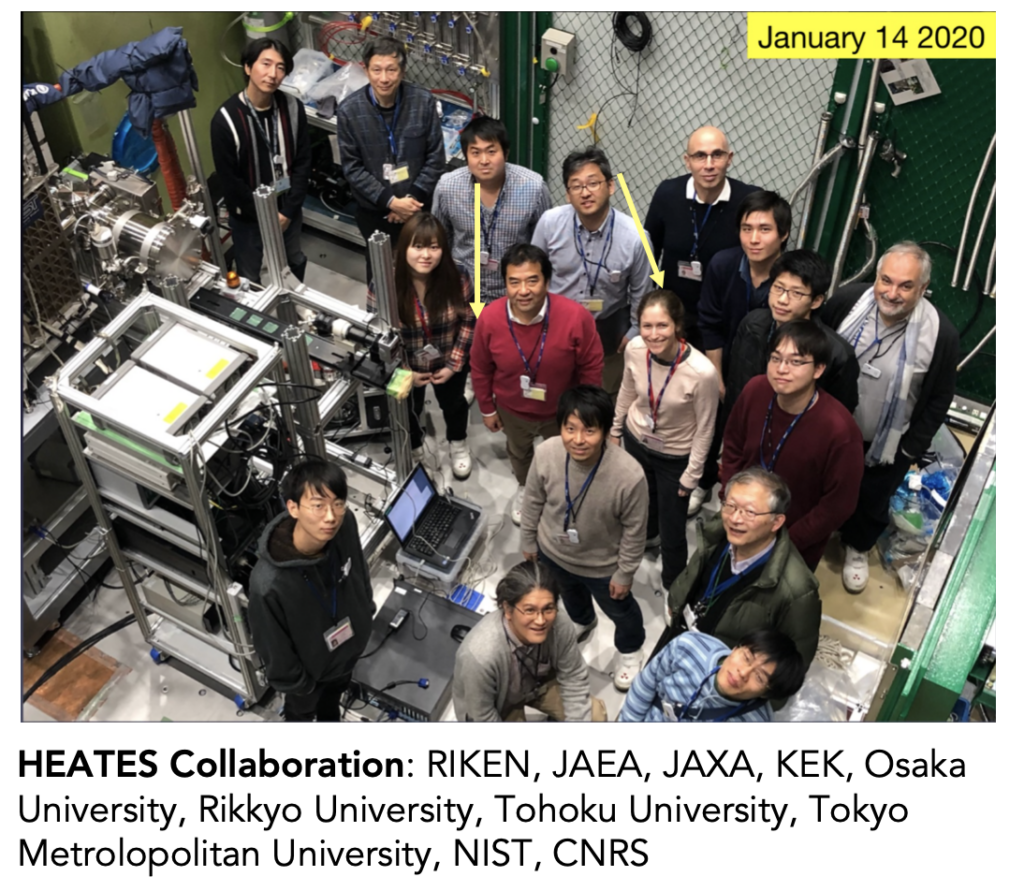
- HEATES, led by RIKEN, uses TES detectors at J-PARC to measure Rydberg transitions in muonic atoms for strong-field QED tests.

QUARTET
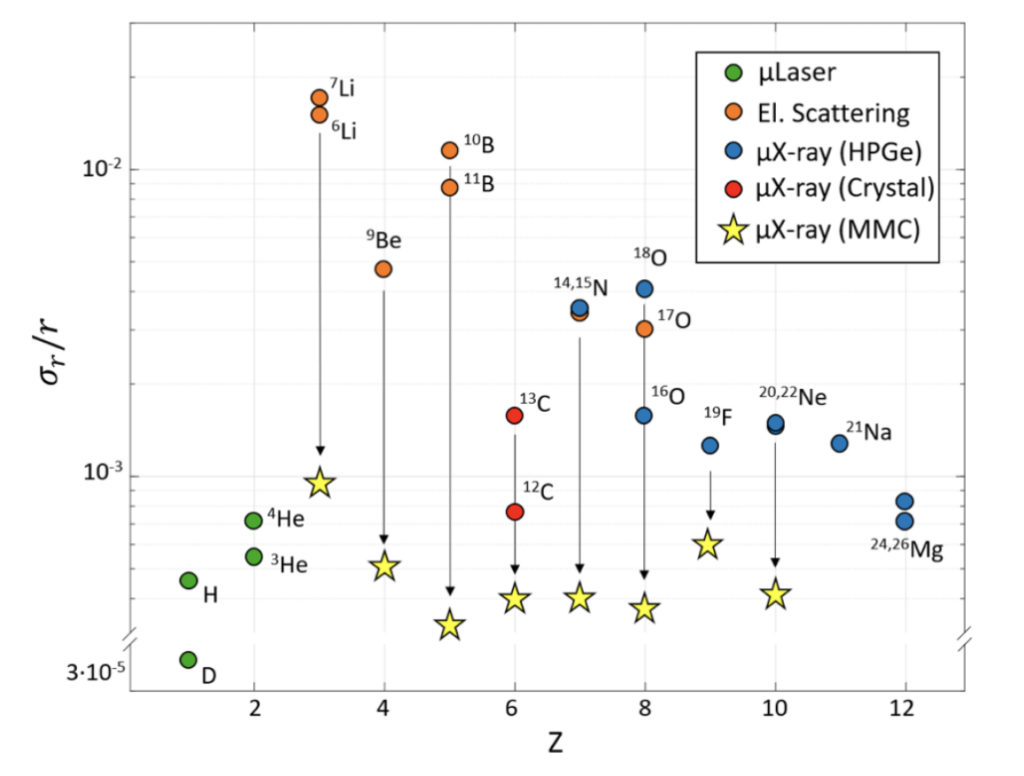
Current status and opportunities with improved radii of light nuclei. The vertical axis is the fractional uncertainty, with the data-points corresponding to the current most precise values for each nucleus. The values include nuclear theory uncertainties. The stars denote the accuracy goals which can be reached within the QUARTET project considering both experimental and theoretical uncertainties.
Muonic atoms are exotic bound systems consisting of a negative muon, a nucleus, and possibly several electrons. Due to the heavy mass of the muon (mμ ∼ 200me), its Bohr radius is much smaller than in electronic atoms and thus for low angular momentum states the muon has a large overlap with the nuclear wavefunction. The nuclear properties lead to measurable shifts in the atomic transition energies, making muonic atom spectroscopy an effective probe of phenomena such as nuclear finite size effects, relativistic QED contributions, and short-range interactions carried by new heavy mediators. These systems are particularly well suited to accurately determine RMS nuclear charge radii, which can be obtained via the spectroscopy of the low-lying radiative transitions (mostly 2P − 1S) in muonic atoms.
With the exception of 12C, radii in the range Z = 3 − 10 are the least well-measured in the stable region of the nuclear chart. This has several causes: The first is that the fractional contribution of the finite nuclear size to the binding energy of hydrogenic systems scales as Z2, so that a high absolute accuracy is needed when considering light elements. However, the relevant transitions lie below a few hundred keV, making x-ray spectroscopy using solid-state detectors highly limited by the intrinsic resolution of these detectors, which is typically several hundred eV. Laser spectroscopy of muonic atoms can reach an excellent accuracy, however it has only been applied to Z = 1, 2, and is challenging to extend to higher Z . This is due to the wide search region stemming from the current uncertainty in the radii, and in the difficulty in making high- power lasers. Finally, x-ray spectroscopy using crystal spectrometers offers high resolution in the keV regime (up to ∼ ppm). Unfortunately, it suffers from low efficiency and a narrow bandwidth, making crystal spectroscopy impractical to extend to the entire series of light elements.
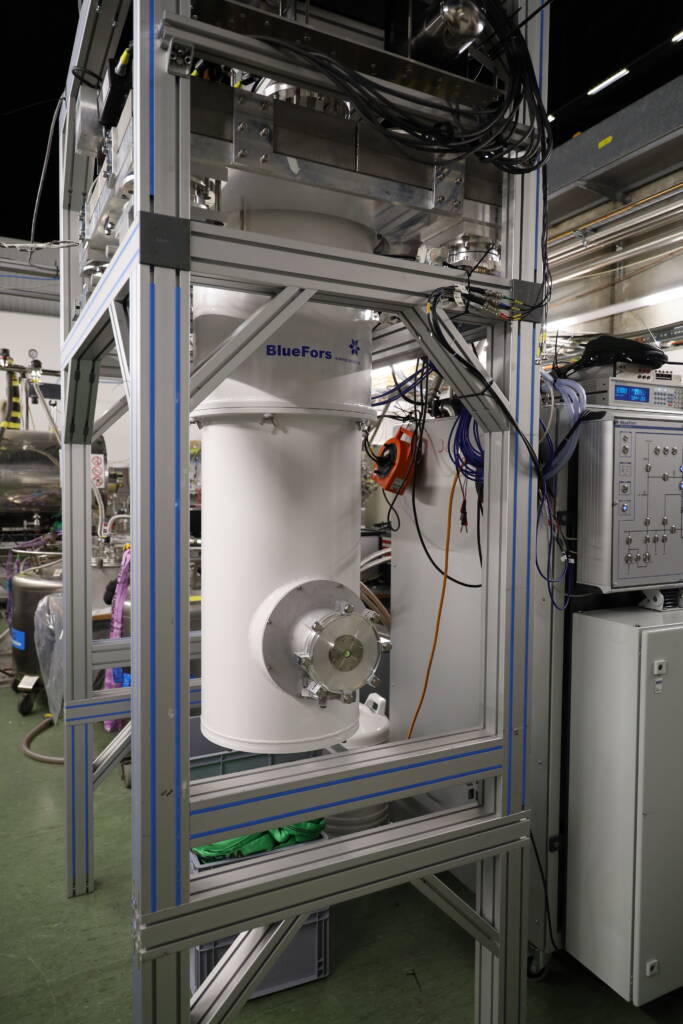
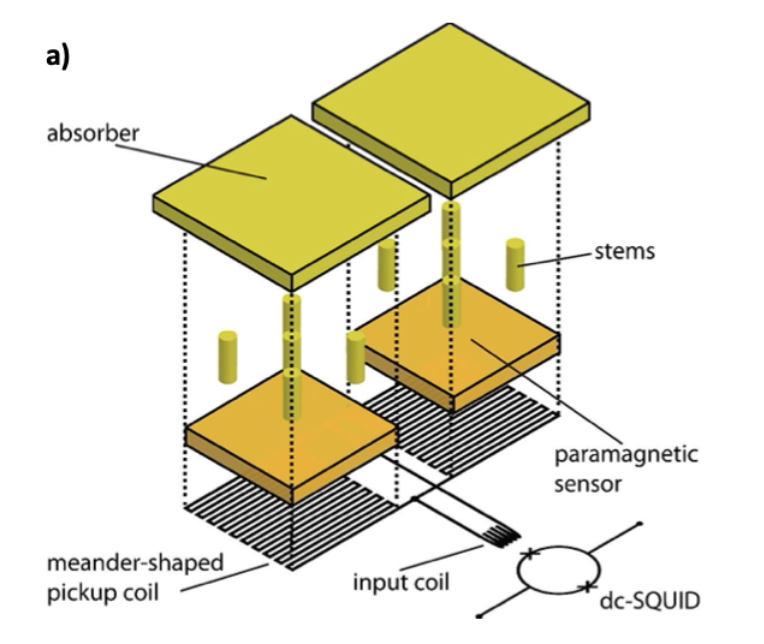
The QUARTET collaboration will measure the radii of light nuclei (3 ≤ Z ≤ 10) with up to an order of magnitude higher accuracy than their current experimental values. To do this we will carry out high resolution muonic x-ray spectroscopy utilizing quantum sensing detectors: metallic magnetic calorimeters (MMCs). These detectors combine the highest resolving power with broadband capabilities in the energy range of interest, while remaining an order-of-magnitude more efficient than crystal spectrometers. These are novel low temperature detectors characterized by an excellent energy resolution, fast response time and a good linearity. MMCs can be described as composed of an absorber, whose dimensions are optimized for the particles or photons to be detected, which is thermally connected to a paramagnetic temperature sensor sitting in a constant magnetic field. The sensor is weakly coupled to a thermal bath kept at a constant temperature, typically below 30 mK. An incident photon induces an increase in temperature of the absorber, which leads to a decrease of the magnetization of the paramagnetic sensor which is detected as a change of magnetic flux in a suitable superconducting pick-up coil. This, in turn, is coupled to a low-noise, high-bandwidth DC-SQUID, as front-end of the two-stage SQUID readout. The working principle of MMCs is based on near equilibrium thermodynamics, which is well understood. Therefore the detector response of MMCs can be precisely modeled, allowing for detector design optimization and reliable metrology.
The QUARTET program
QUARTET aims to improve the charge radii of the stable nuclei from lithium to neon by a factor of 3 to 10. To do this, it measures the 2p→1s transition energies of muonic atoms to about 10 ppm.
- 2022 · Collaboration founded at a first meeting in Paris (Jussieu).
- 2023 · First test beam at PSI, on muonic Li, Be and B.
- 2024 · QUARTET becomes an official PSI experiment. Production beamtime on Li, Be and B.
- 2025 · Muonic oxygen.
- 2026 · Muonic nitrogen, with a new gas target cell, the first for QUARTET.
- 2027 · Neon, completing the program.
The first physics result, on muonic beryllium, has been submitted: O. Eizenberg et al., “Nuclear charge radius of ⁹Be from muonic atom spectroscopy using a microcalorimeter”, arXiv:2607.13690 (2026). Results on Li and B are close to publication, and oxygen is under analysis.
Read more
- Towards Precision Muonic X-ray Measurements of Charge Radii of Light Nuclei, B. Ohayon et al, Physics 6, 206-215 (2024).
- MMC Array to Study X-Ray Transitions in Muonic Atoms, D. Unger et al, J Low Temp Phys 216, 344–351 (2024)

HEATES
The small Bohr radius of muonic atoms means that their atomic bound states are found in strong Coulomb fields. In fact, not just the lowest-n states, but an ensemble of states are in this strong-fields. A regime of transitions can be identified between circular Rydberg states in muonic atoms where second-order QED effects are larger than the contributions from nuclear effects. The HEATES collaboration aims at performing high-precision spectroscopy of these states for probing strong-field QED, and notably the vacuum polarization effect which is dominant in exotic atoms.
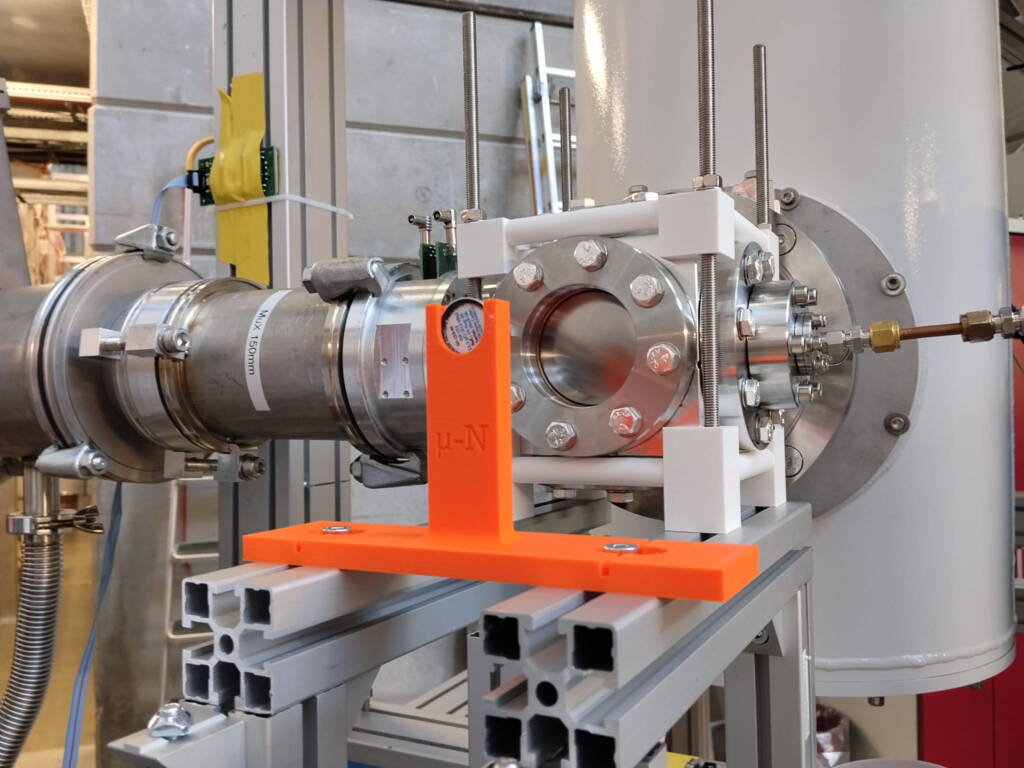
The HEATES measurements are performed at the J-PARC facility located in Tokai, Japan using a pulsed muon beam and the D2 beamline at the Materials and Life Science Experimental Facility (MLF) at J-PARC. MLF provides the necessary intense pulsed negative muon beams with energies down to 58 keV (3.5 MeV/c). This enables us to stop isolated muons directly at high rates in low-density gas targets. The HEATES program continues at J-PARC.
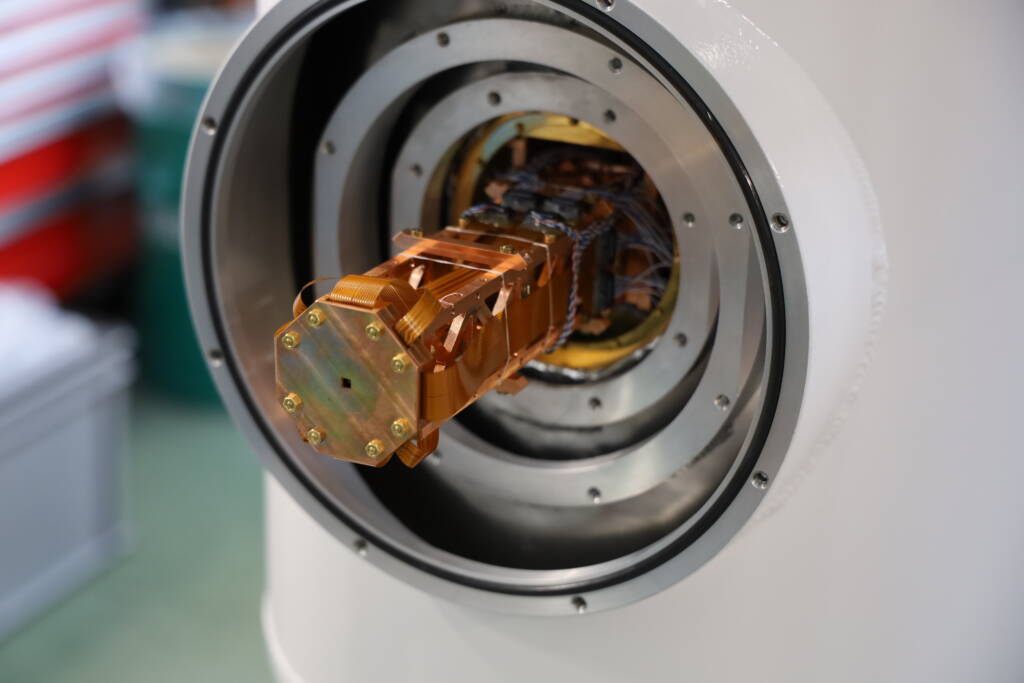
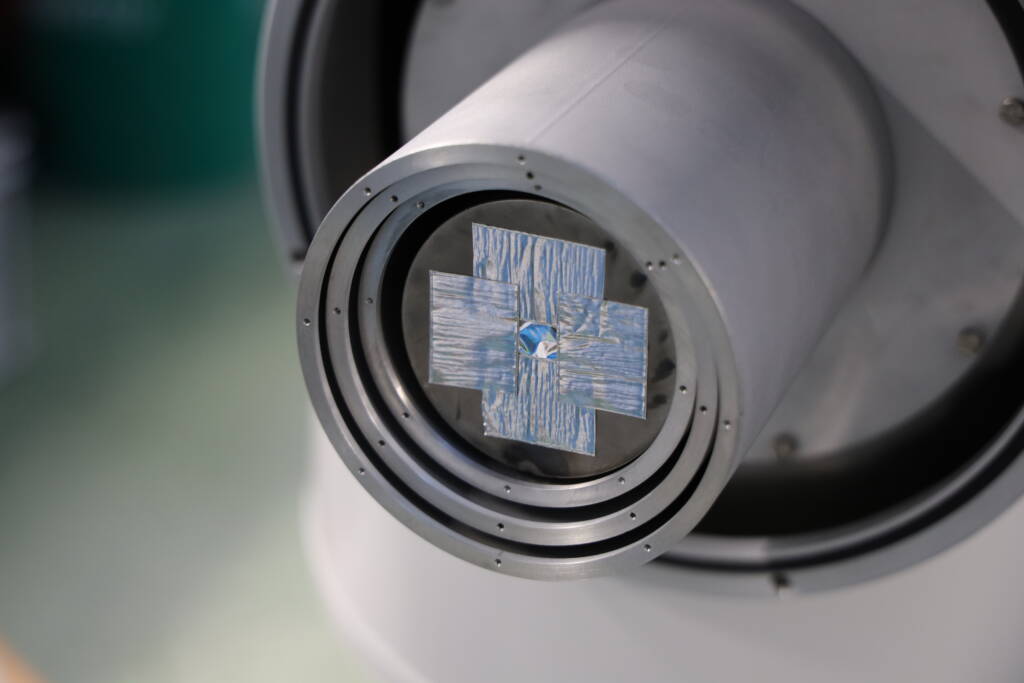
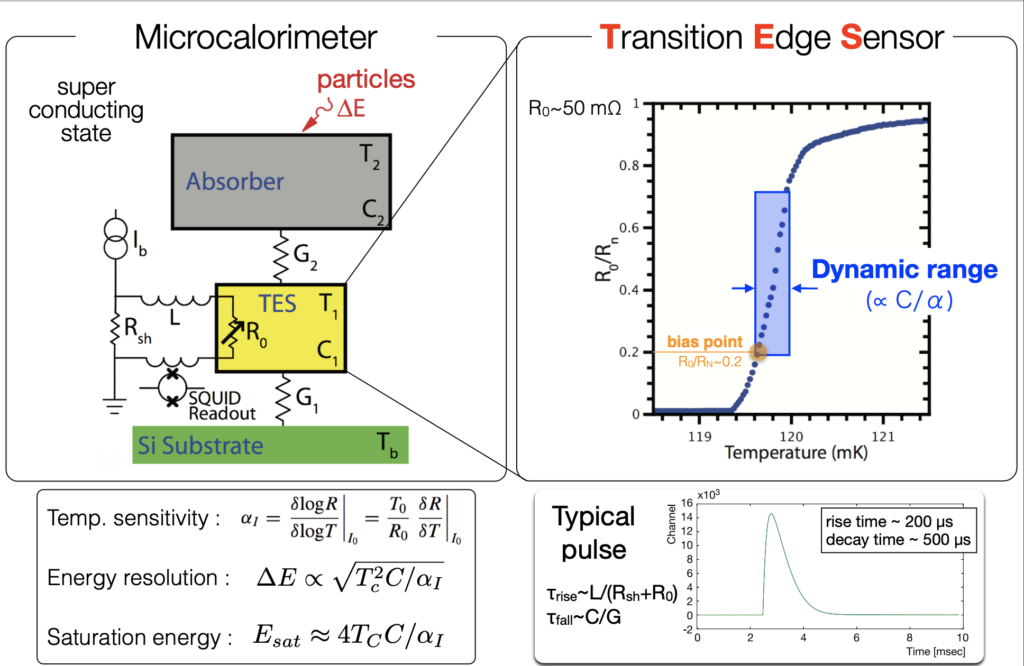
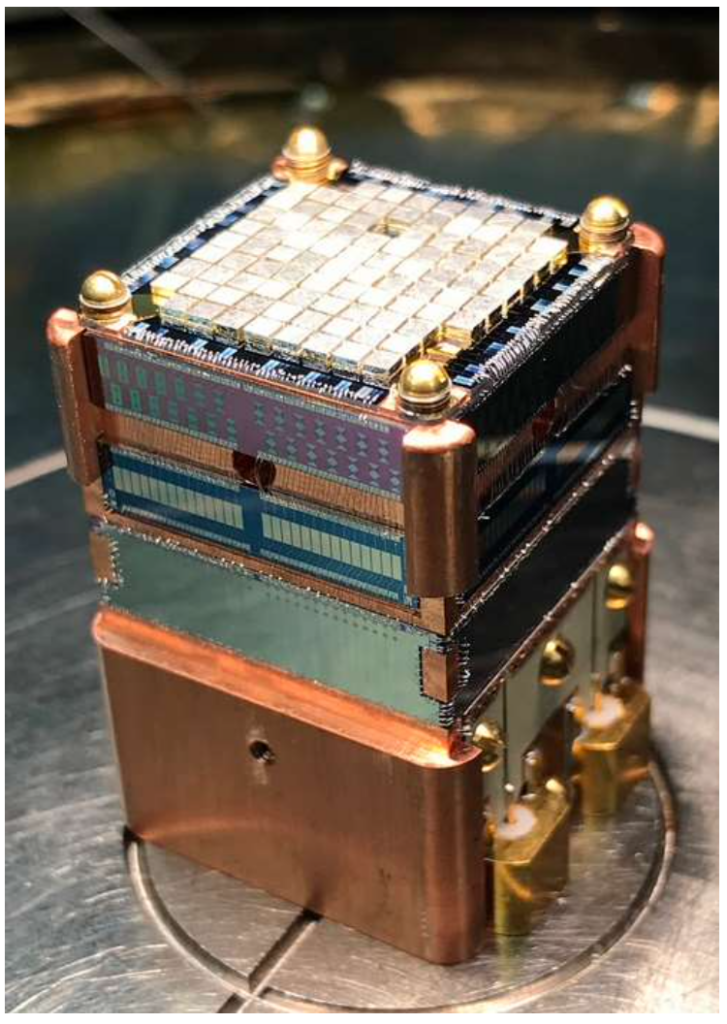
The key to the HEATES program are the hard x ray TES detectors developed by the Quantum Sensing Division at NIST in Boulder, Colorado. The HEATES x-ray detector is based on a 240-pixel TES array, cooled with a pulse-tube-backed adiabatic demagnetization refrigerator (ADR). Each pixel contains a TES consisting of a bilayer of thin Mo/Cu films whose superconducting critical temperature is about 107 mK, and a 4 μm-thick Bi absorber for converting an x-ray energy into heat. The TES can detect x rays up to 10 keV, and the absorption efficiency of the Bi layer is 85% at 6 keV. The effective area of each pixel is 305 × 290 μm2 and the total active area of the array is about 23 mm2. This detector was deployed for campaigns in 2019-2022, and a new, higher energy TES with Sn absorbers was added starting in 2023.
The first measurements of muonic Ne were successful and demonstrated the long-term feasibility of the scientific program, while highlighting the key systematic effects. The high intrinsic resolution of the detector also revealed unexpected signatures of the muonic atoms cascade, which opened a whole new domain of studies of exotic atom dynamics, never visible before.
To learn more about the HEATES physics program, check out:
- Testing Quantum Electrodynamics with Exotic Atoms, N. Paul et al, Physical Review Letters 126, 173001 (2021).
- Deexcitation Dynamics of Muonic Atoms Revealed by High-Precision Spectroscopy of Electronic 𝐾 X Rays, T. Okumura et al, Physical Review Letters 127, 053001 (2021).
- Proof-of-Principle Experiment for Testing Strong-Field Quantum Electrodynamics with Exotic Atoms: High Precision X-Ray Spectroscopy of Muonic Neon, T. Okumura et al, Physical Review Letters 130, 173001 (2023).