
Research
Rydberg atoms are particularly well suited to quantum simulation of interacting spins. Atoms that are excited to these high-principal-quantum-number states interact strongly through dipole-dipole or van der Waals interactions. In our group, we aim at the realisation of a quantum simulator that exploits the unique properties of circular Rydberg atoms, i.e. Rydberg levels with maximal orbital momentum. In a cold environment, these levels live several tens of milliseconds, while the laser-accessible, low-orbital-momentum Rydberg levels live a few 100µs only.
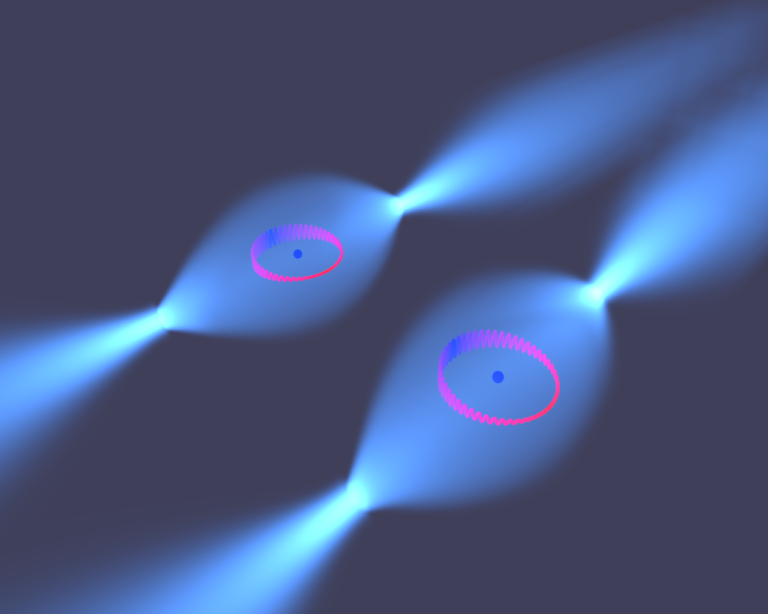
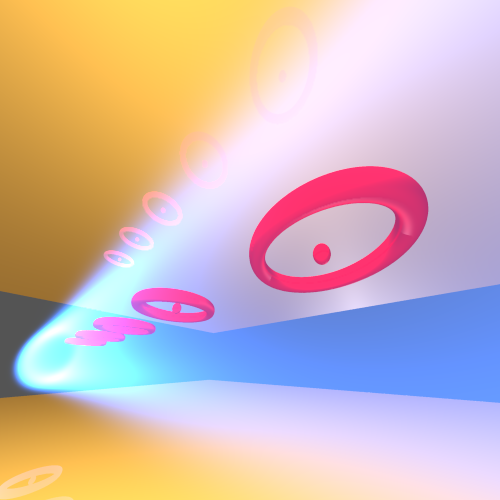
We build two different setups that laser trap circular Rydberg levels of either individual Rubidium atoms in hollow optical bottle beams or individual Strontium atoms in optical tweezers. A third setup, now in LCAR, Toulouse, laser traps circular Rydberg atoms in a structure that inhibits spontaneous emission, bringing their lifetime to the minute range.
News
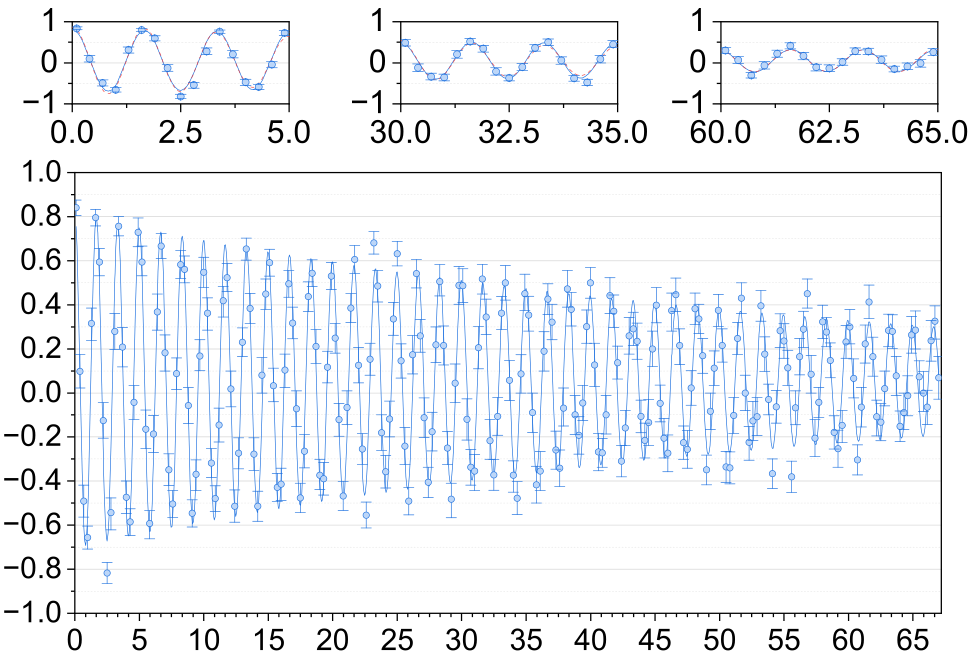
A new paper for the Rb team!
Spin-exchange interactions between circular Rydberg atoms over long times A. Drurán-Hernández, G. Creutzer et al., arXiv:2609.37766
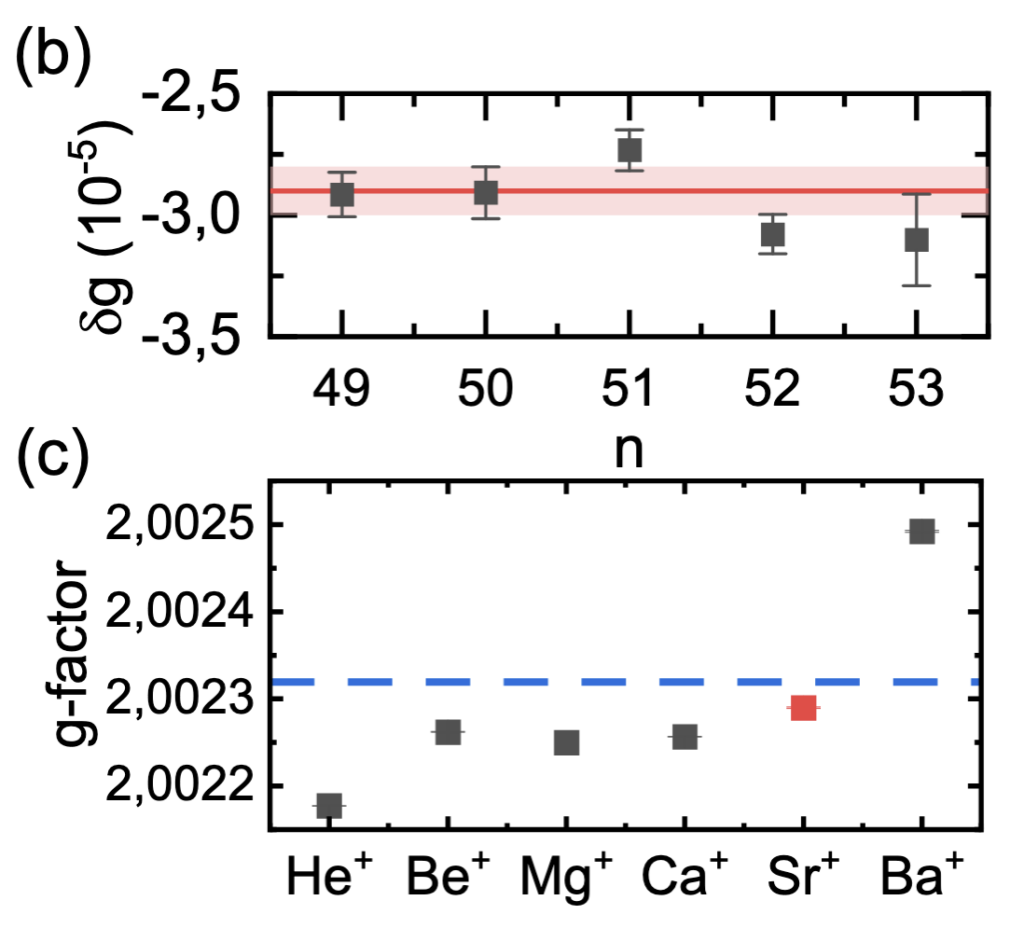
A new paper from the Sr atom team!
Measuring the Sr+ 5s1/2 Landé g-factor Using Singlet-Triplet Oscillations in a Circular Rydberg State of Strontium, B. Muraz et al., arXiv:2608.26784
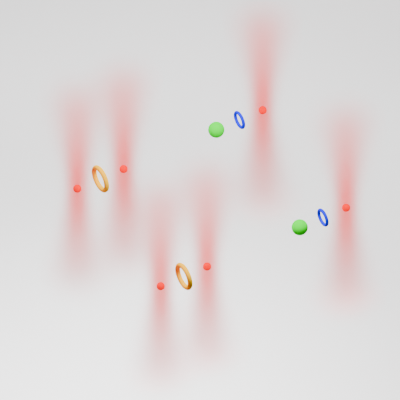
Paper published in Phys. Rev. X!
Nondestructive Optical Readout and Manipulation of Circular Rydberg Atoms Y. Machu et al., Phys. Rev. X 16, 021040 (2026)
Events

The team
Jobs
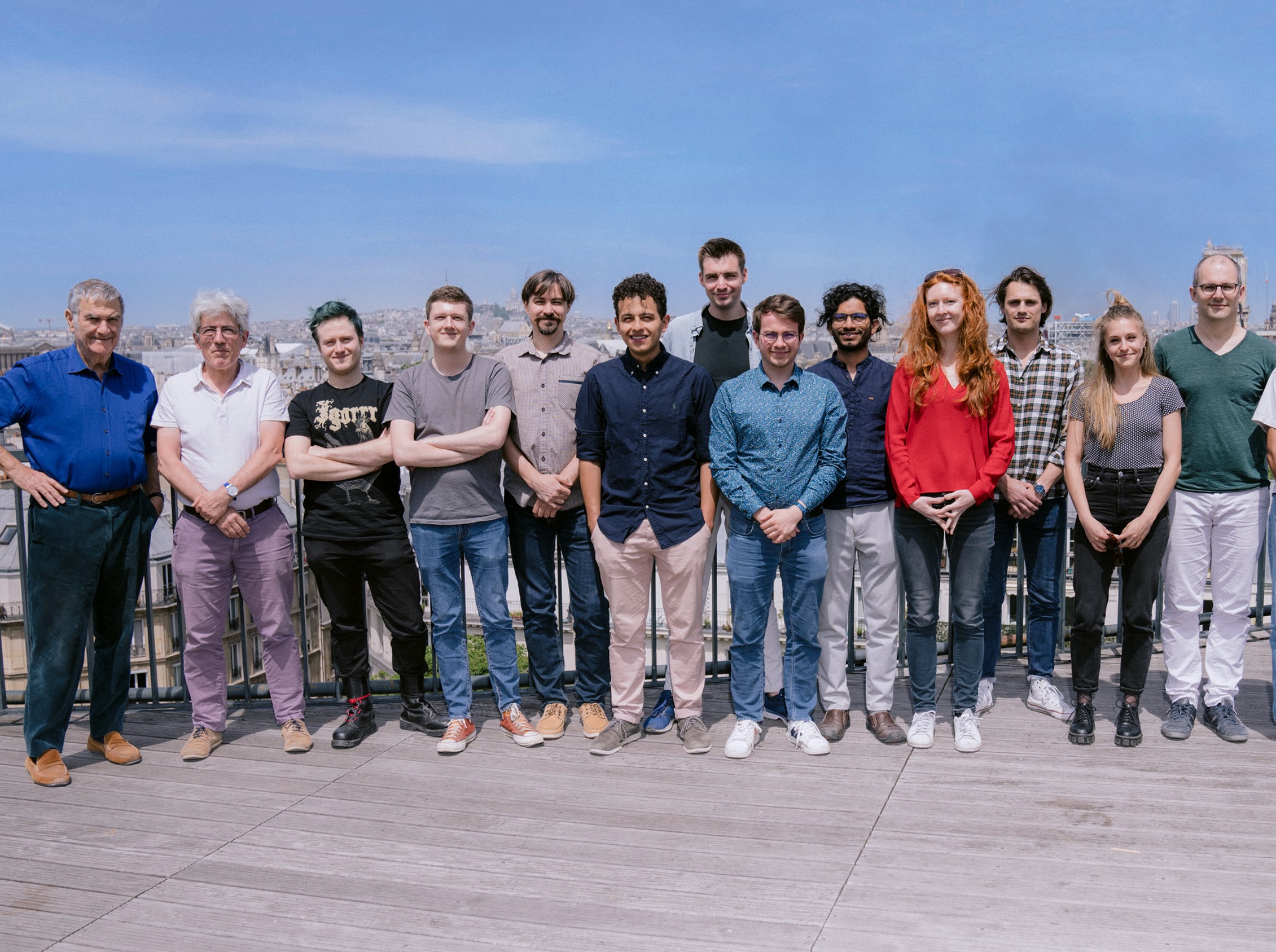
We are always looking for brillant motivated scientists to join our group.
Check the open positions or send us your CV for applications.
Jobs
PhD position — Quantum simulation with circular Rydberg states of strontium
A M2 internship/PhD position is open in the Rydberg atoms group of LKB, towards quantum simulation with circular Rydberg atoms of Strontium.
Contacts: Sébastien Gleyzes (gleyzes@lkb.ens.fr), Brice Bakkali-Hassani (brice.bakkali-hassani@lkb.ens.fr)
Scientific context
Rydberg atom arrays are powerful platforms for the quantum simulation of spin models. Ground-state atoms trapped in optical tweezers are arranged in an arbitrary geometry before being transferred into low-angular momentum Rydberg states using laser pulses. However, the duration of the simulation is currently limited by the relatively short lifetime of laser-accessible Rydberg states. Circular Rydberg states, i.e. Rydberg states with maximum angular momentum, have an extremely long radiative lifetime, and open the way to studying quantum dynamics on much longer timescales [1].
In our group, we are building a quantum simulator based on circular states of strontium. Strontium is a two-valence-electron atom, and its ionic core remains optically active when one of the valence electrons is excited to a circular Rydberg state. The ionic-core transitions can be driven without autoionizing the atoms [2], which enables laser slowing of atoms directly in the Rydberg state [3] as well as optical manipulation of the Rydberg state via its electrostatic interactions with the ionic core [4]. In the experiment, we prepare individual strontium ground-state atoms in optical tweezer arrays inside a cryostat and excite them to circular Rydberg states. The circular atoms are trapped in the same tweezers as the ground-state atoms using the polarizability of the ionic core. Thanks to the suppressed blackbody radiation in our cryogenic environment, we have demonstrated a circular state lifetime of about 2 ms, roughly 40 times longer than that of laser-excited Rydberg states [5]. We are currently studying the interactions between pairs of circular Rydberg atoms.
PhD Project
The purpose of the PhD is to pursue our ongoing effort toward building a strontium circular state quantum simulator. The long lifetime of the circular state, combined with the ability to trap the atom with very low power thanks to the polarizability of the ionic core, opens the way to performing quantum simulation over very long timescales with a large number of atoms, even in a cryogenic environment. In the coming years, we plan to develop innovative methods to prepare defect-free 2D arrays of circular atoms that will give access to a rich landscape of spin models, including frustrated systems that can host exotic, highly entangled ground states. This will open the way to the preparation and study of quantum spin liquids. Circular states of strontium also offer interesting prospects in quantum optics. The interaction between the Rydberg electron and its ionic core opens a way to directly couple Rydberg atoms to optical photons.
Master Project
We have recently purchased a new closed-cycle cryostat. During the master’s internship, the student will focus on building a new laser system to prepare Rydberg atoms in this setup.
References
[1] T. L. Nguyen et al., Towards quantum simulation with circular Rydberg atoms, Phys. Rev. X 8, 011032 (2018) – https://journals.aps.org/prx/abstract/10.1103/PhysRevX.8.011032
[2] R. C. Teixeira et al., Preparation of long-lived, non-autoionizing circular Rydberg states of strontium, Phys. Rev. Lett. 125, 263001 (2020) – https://journals.aps.org/prl/abstract/10.1103/PhysRevLett.125.263001
[3] L. Lachaud et al., Slowing down a coherent superposition of circular Rydberg states of strontium, Phys. Rev. Lett. 133, 123202 (2024) – https://journals.aps.org/prl/abstract/10.1103/PhysRevLett.133.123202
[4] A. Muni et al., Optical coherent manipulation of alkaline-earth circular Rydberg states, Nat. Phys. 18, 502-505 (2022) – https://www.nature.com/articles/s41567-022-01519-w
[5] B. Muraz et al., Measuring the Sr+ 5s1/2 Landé g-factor using singlet-triplet oscillations in a circular Rydberg state of strontium, arXiv:2608.26784 (2026) – https://arxiv.org/abs/2608.26784
PhD position — Quantum simulation with a Hybrid Rydberg platform
A M2 internship/PhD position is open in the Rydberg atoms group of LKB, towards quantum simulation with circular Rydberg atoms of Rubidium.
Contacts: clement.sayrin@lkb.ens.fr, michel.brune@lkb.ens.fr
Scientific context
Rydberg atoms, i.e., atoms excited to high-principal-quantum-number levels, are particularly well suited to the quantum simulation of condensed matter systems [1]. They can be prepared from arrays of single atoms, laser-trapped in optical tweezers, and their strong dipole-dipole interactions (in the MHz range, even at a few microns) enable the observation of quantum phase transitions and of quenched dynamics. However, the lifetime of Rydberg levels currently limits the simulation time to a few microseconds only.
In Laboratoire Kastler Brossel, we have developed a novel hybrid platform where spin 1/2s are encoded into circular Rydberg atoms, i.e., Rydberg atoms with maximal angular momentum. The latter have a 100-times longer lifetime than usually employed Rydberg atoms. Their use would bring quantum simulations to unprecedented regimes, with the simulation of long-term dynamics. We trap the circular Rydberg atoms in optical bottle beams [2], and we locally manipulate and detect them by coupling them to an array of ancilla atoms transiently excited to a regular low-angular momentum Rydberg level.
We have demonstrated the quantum non-demolition measurement of the circular Rydberg atoms with the ancillae, as well as a spatially-resolved manipulation of their quantum states [3]. Recently, we have used this hybrid platform to observe the spin-exchange interaction between two circular Rydberg atoms over more than 60µs [4], improving the state of the art by an order of magnitude.
This work opens the route towards the simulation of complex phenomena, including the observation of long-term dynamics of interacting spin 1/2s, or the interaction of larger (>1/2) spins. This would significantly enrich the scope of Rydberg-based quantum simulators.
M2 Internship
Our experiments are performed in a UHV chamber operated at room-temperature. To fully benefit from the long lifetimes of the circular Rydberg atoms, we need to transfer the existing setup to a cryogenic environment. The intern will actively participate to the development of the cryogenic platform, which should be operational at the beginning of the internship. The intern will participate to the implementation of existing atom manipulation into the new cryogenic setup. In particular, he/she will participate to the adaptation of the optics, microwave and radiofrequency setups to the cryogenic platform. His or her work will, thus, constitute, a decisive contribution to our quantum simulations project.
PhD Thesis
The end of the internship and the first months of the PhD work will be devoted to the operation of the new cryostat and its optimization. We will benefit from the enhanced lifetimes of the Rydberg levels to improve the performances of the existing room-temperature setup. During the PhD work, the proposed quantum simulator will then be operated. Quantum simulation of spin-1/2 Hamiltonians will first be performed, with the observation of long-term dynamics, out of the reach of existing simulators. We will then focus on the simulation of the interaction between spin 1s or larger. We will in particular use the ancillae to tune the interaction between the circular Rydberg atoms, using techniques developed in on-going collaborations with theoretical teams [5].
References
[1] T. L. Nguyen et al., PRX 8, 011032 (2018)
[2] B. Ravon et al., PRL 131, 093401 (2023)
[3] Y. Machu et al., PRX 16, 021040(2026)
[4] A. Durán-Hernández et al, arXiv :2609.37766 (2026)
[5] T. Botzung et al, PRR 8, L022019 (2026)
