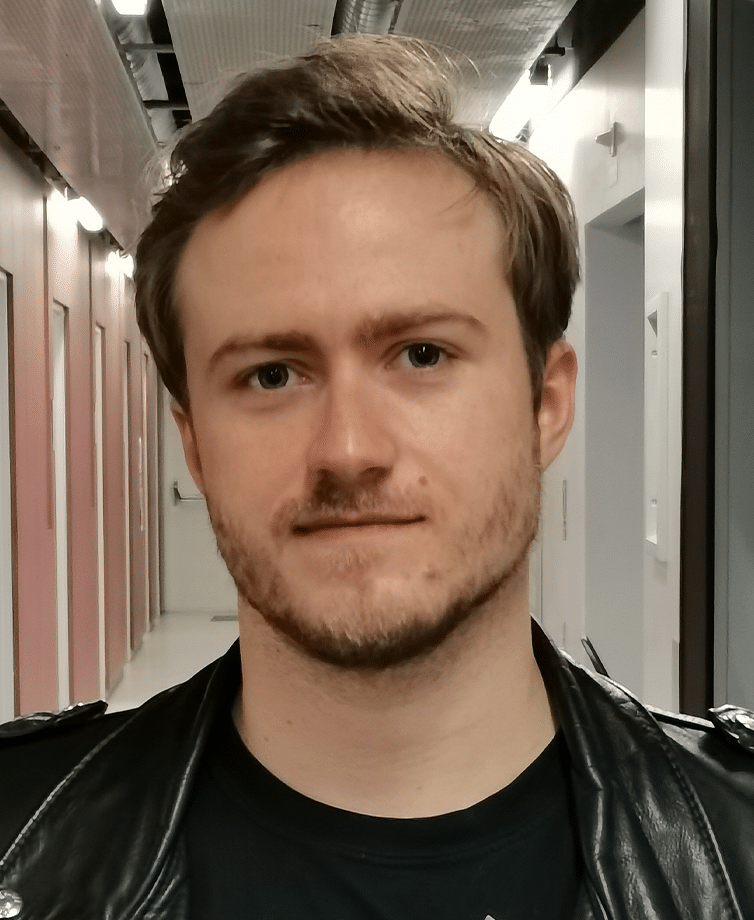
Guillaume Cœuret-Cauquil has sucessfuly defended his PhD thesis, entitled “Towards realisation of long-lived ensembles of circular Rydberg atoms”, realized under the supervision of Igor Dotsenko. Congratulations Guillaume!
Abstract
The description of the evolution of many-body quantum systems is a difficult task. However, the associated computational complexity prevents ab-initio calculation on classical computers. A possible alternative is analogue quantum simulation. In that context, our group proposed a new quantum simulator based on trapped circular Rydberg atoms protected from the spontaneous emission. Cooled down below one Kelvin, this setup is expected to reach longer simulation times, allowing for the study of processes out of reach of other experimental platforms.
The first part of this manuscript presents a quantum thermodynamics experiment, carried out on a previous cavity quantum electrodynamics setup. Using the interaction between an atom and a superconducting cavity, we simulated different decorrelating environments and measured their entropy production, at the microscopic scale of the single quantum particle. The discussion emphasises the difficult measurement of the relative entropy and solutions used for data-processing. The second part presents the design and implementation of a new experimental setup intended for the future simulation of a spin-1/2 chain. For this purpose, the previous experimental setup and procedures had to be modified and adapted. Inhibition of the spontaneous emission is realised by two conductive parallel plates reducing the density of modes into which atoms can decay. To maximise the atomic states lifetime, the setup has been designed to isolate the atoms while preserving the necessary control capabilities. So far, the main result obtained is the realisation of a deterministic source of trapped cold atoms inside the inhibition region. All elements required for the circular Rydberg atoms preparation and detection have been assembled and are currently being tested on the atoms.